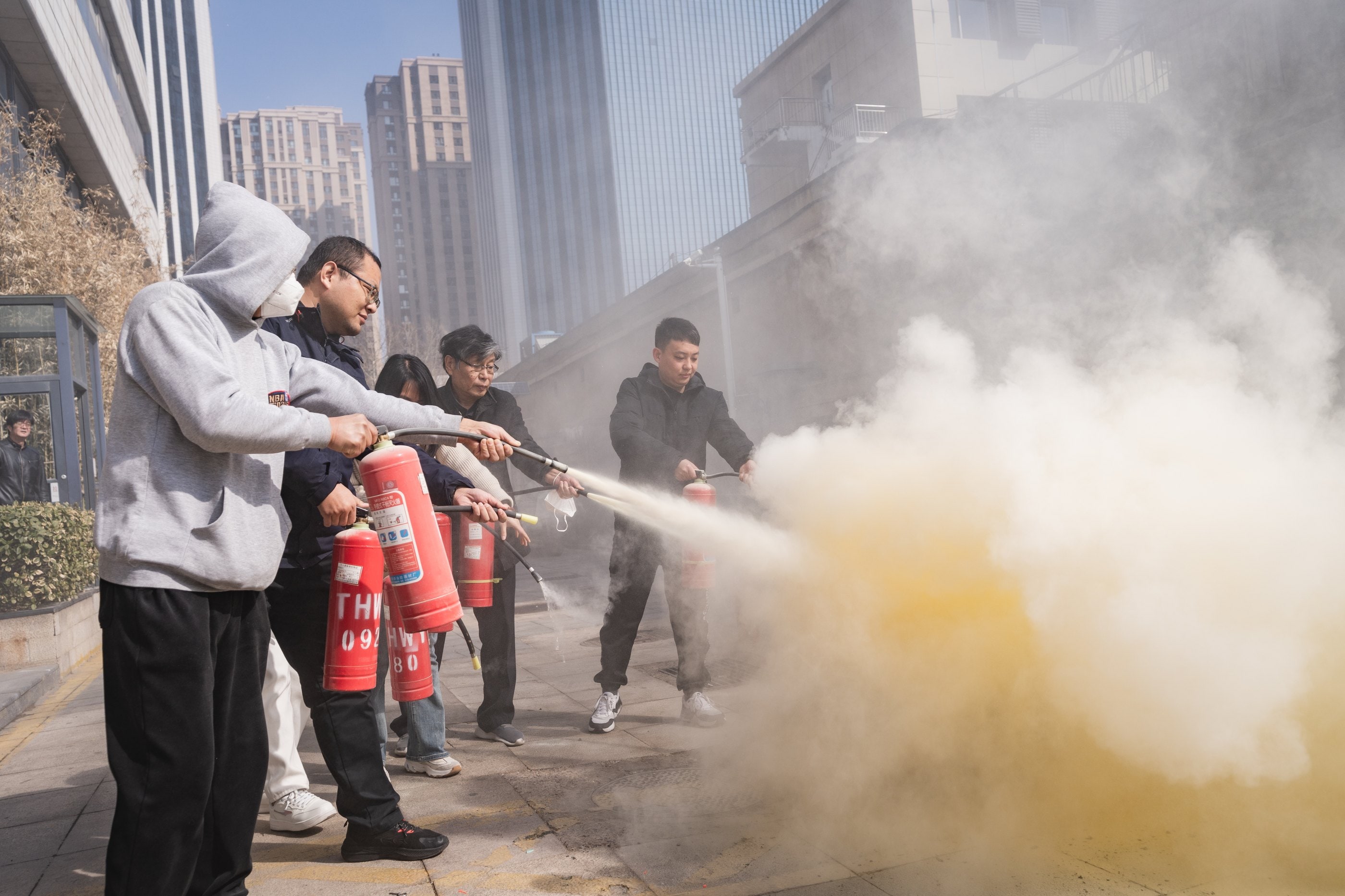
BSC Global Maker Incubator organised fire safety training and a live drill for its tenant companies to raise awareness, improve staff readiness in an emergency and give managers and front-line employees practical escape skills. The session combined classroom instruction with hands-on practice so that participants could learn the essentials of fire safety and the correct use of fire-fighting equipment.
Using real fire cases, the instructor explained common causes of fire, including overloaded electrical equipment, improper storage of flammable materials and careless use of open flames, and stressed that prevention matters more than fire-fighting. Because the incubator houses many small businesses in densely used office space, the training focused on office fire prevention: computers, printers and other equipment should be switched off at the power when not in use, and cardboard boxes, plastic bottles and other flammable materials should not be stored around workstations.
The instructor then demonstrated how to respond to a fire. A fire in its early stage can be tackled with an extinguisher, following the sequence of lifting the extinguisher, pulling the pin, aiming at the base of the flames and squeezing the lever. Once a fire spreads, the priority is to call the fire service immediately and evacuate people in an orderly way. The instructor also covered escape techniques, warning that smoke is the greatest danger in a fire: cover the nose and mouth with a wet towel, stay low, never use the lift, and follow the evacuation signs.
After the classroom session the evacuation drill began. The scenario simulated a fire caused by an electrical short circuit on an office floor. When the alarm sounded, simulated smoke was released and participants, protected by wet towels, left by the planned evacuation routes and gathered in good order at the assembly point.
The drill was followed by equipment practice. The instructor demonstrated the portable dry-powder extinguisher, shaking the cylinder to loosen the powder and spraying the base of the flames from two to three metres away, and participants took turns to practise. Fire hydrant training covered the full sequence of connecting the hose, coupling the nozzle, opening the valve and controlling the flow, and staff from tenant companies practised the procedure themselves.
The training and drill form part of the incubator's safety programme. The incubator will continue to hold regular fire drills and safety education, inspect and remove hazards on its premises, and maintain a safe and stable working environment for its tenant companies as part of the support services it offers to small and medium-sized businesses.